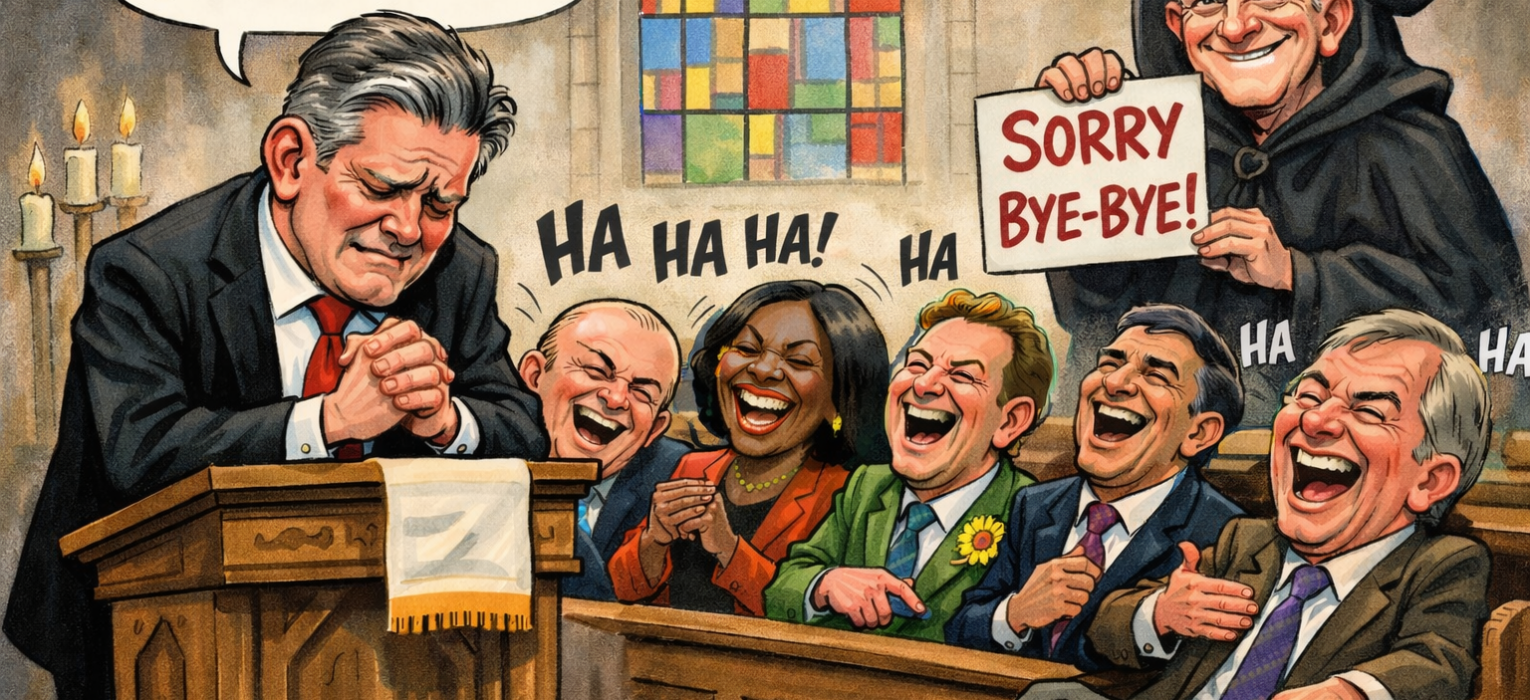
When ignorance becomes the excuse, it stops being a defence — and starts being the scandal.
Keir Starmer promised competence, integrity, and judgment. Instead, he gave the country a scandal soaked in denial, cronyism, and decisions only insiders would call “bold.”
Peter Mandelson wasn’t unknown. His past, his controversies, even his links to Jeffrey Epstein — all were public knowledge. And yet Starmer appointed him anyway. This isn’t politics as usual. This is a Prime Minister digging a hole and asking us to believe he can’t see the bottom.
The of Prince of Darkness Returns — And Everyone Knew
Mandelson is one of the most influential, controversial figures in modern British politics. Twice a cabinet minister who resigned in disgrace, he’s always been at the heart of power, whispers, and scandal.
Appointing him to a sensitive diplomatic role was never low-risk. Anyone paying attention knew it. Journalists, MPs, insiders — the warning signs were flashing red.
Epstein Wasn’t a Secret
Long before this appointment, Mandelson’s connections to Jeffrey Epstein, a convicted sex offender, were public knowledge. This should have triggered extreme caution.
Yet Starmer went ahead. That’s the simple truth: either he ignored the warnings, or he was dangerously unaware. Neither looks good.
Starmer’s Defence: “I Didn’t Know”
The Prime Minister says he was misled. He “didn’t know the full extent.”
But consider this: when someone’s past is documented, debated, and joked about in political circles for decades, not knowing is an indictment of judgment.
And if he did know? That’s worse. It’s deliberate negligence with full knowledge of the risks.
Media and MPs Saw It Coming
From day one, journalists, commentators , and MPs were uneasy about Mandelson’s return. Questions about vetting, optics, and risk were raised in public — long before the scandal blew up.
History Repeats: Profumo Echoes
The parallels are clear:
A risky insider decision Warnings ignored or downplayed Denial instead of ownership
History doesn’t forgive leaders who confuse ignorance with innocence. Starmer’s position feels like Profumo all over again, except this time the media circus and political stakes are even higher.
Comparison: Profumo vs Mandelson
Event,Key Failures,Outcome
Profumo Affair (1963)
Denial, deception, credibility collapse
PM resigned; government shaken
Mandelson Affair (2025–26)
Misjudgment, denial, soft media scrutiny
The lesson: It’s not the act, it’s the refusal to own it.
Question Time Reality Check
Even on the BBC, the scandal was discussed. Starmer was questioned about judgment and public confidence.
But here’s the catch: the show didn’t hit the killer point.
Nobody demanded, loudly and repeatedly:
“If you didn’t know, how could you lead? If you did, why did you ignore it?”
The optics look fair. The accountability? Not even close.
The Guillotine Ending
So here we are.
A Prime Minister saying he didn’t know.
A media class pretending that ignorance is an excuse.
An establishment closing ranks to insist this was an “accident.”
But Mandelson’s past wasn’t secret. Journalists knew. MPs knew. Political insiders knew. Anyone at the top knew.
Which leaves two possibilities — and neither saves Starmer:
Either he knew, and appointed Mandelson anyway.
Or he didn’t know, and is dangerously unfit for leadership.
No third option. No process review can fix this.
No apology can erase it.
Starmer didn’t fall into a hole. He kept digging it — and then asked the country to believe he couldn’t see the depth.
History is unforgiving.
And it is ruthless with those who think “I didn’t know” is enough.